module 2:
thoughts & emotions
Dealing with thoughts and feelings
How our thinking can influence our emotions
So here’s a great example: While reading and researching for this course, I thought I’d caught corona virus not once, but twice! Because I was so focused on the virus, its symptoms and thinking about the current world situation, I started to focus in on my physical experiences. Putting them under a magnifying glass. And I noticed I had a tickle in my throat, the more attention I put into those sensations the more it became a sore throat which I felt I needed to clear by coughing. And BOOM: I’m feeling super stressed out because here I am thinking “it must be THE virus!”. It wasn’t until later in the evening that I remembered straining my voice earlier in the day.
Perhaps you can relate?
Now, obviously if you do feel unwell, you need to follow your local government’s recommendations… but my point here is: our thoughts impact our emotions.
Have you ever noticed an emotion that was ‘caused’ by a situation (e.g. feeling sad when your friend didn’t reply to a text, worry when your boss calls you in for an unexpected meeting, or disappointment when your partner has to work late on your birthday) only to get more information later and the emotion changed completely (your friend’s phone was broken or stolen, relief when the meeting had nothing to do with your ongoing employment, and joy when you realise your partner has arranged a surprise party)… actually the situation didn’t cause the emotion. Our thoughts did. The thoughts: my friend doesn’t like me, I’m going to get fired, my birthday won’t be special.
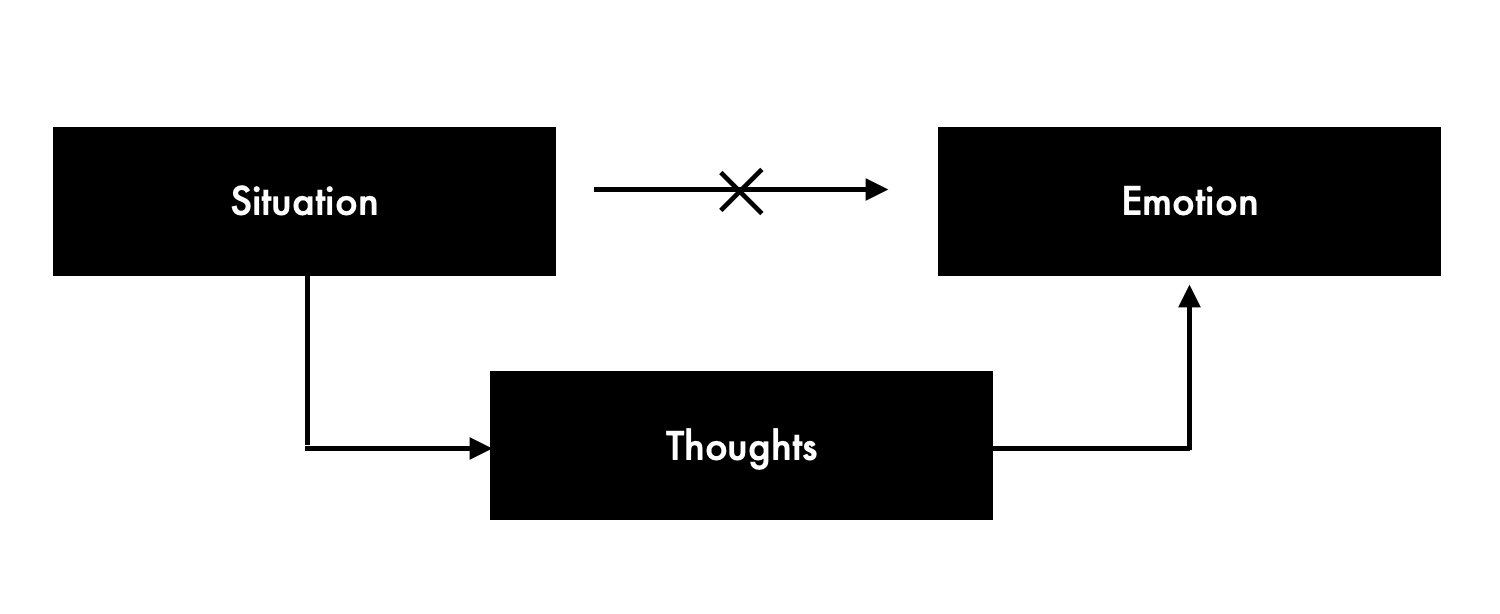
Do you get my drift? Our thoughts about a situation, ourselves, others and the world create our emotions. Now don’t get me wrong, it might not always feel like this - sometimes these thoughts are so fast we don’t catch them. And so it feels like the circumstances created our emotion.
Something else that can get us in hot water is when we think of our thoughts as FACTS. Hot tip: they’re not. Look back at the examples above: there were thoughts (or interpretations) that we made about each situation that created the emotion. Now, did our thoughts turn out to be correct? No! So in each example the situation didn’t change, but our thoughts and emotions did (we didn’t know that a surprise party was being organised, but that doesn’t change the fact that it was).

So, your practice exercise is to notice thoughts, identify the emotion if you can, and evaluate (honestly) is this a fact? We will keep building on this in the next section.
If you notice yourself answering the question “is your thought a fact?” with ‘well it could be” or “yeah, it’s 90% fact that x will happen” then the answer is NO it’s not a fact. This is a yes/no question!